Adopting A Circular Model
Some mainstream bottling systems are still primarily linear—raw materials are used to make packaging, and after the product is consumed, the packaging is thrown away, adding new waste to the environment. Simply put: this model isn’t sustainable.
Since 2018, evian has been working towards its ambition of becoming a circular brand by helping keep plastic in the economy and out of nature.
Today, around 85%* of evian bottles placed on the market are made from recycled PET (except caps and labels), including all bottles sold in Europe, the United States and Canada.
Increasing recycled content remains a key part of our approach, alongside designing bottles for recyclability and supporting effective collection and recycling systems.
We believe circularity requires collective action across the entire value chain. This includes improving collection, sorting and recycling infrastructure and supporting solutions such as Deposit Return Systems (DRS), which help recover high-quality materials that can be recycled into new bottles.
Our ambition remains unchanged: to help advance a more circular model where materials stay in use for longer and are kept out of nature.
*internal data –July 2026
A natural cycle
evian natural mineral water is one of nature’s many wonders. That’s why we want to do our part in preserving nature. The great thing about this is that nature itself shows us how we can help.
Did you know, for example, that evian natural mineral water itself is part of a natural cycle?
Water evaporates and enters the atmosphere. Then, it falls again in the form of rain and snow and soaks into the soil. It then takes a 15-year journey of natural filtration through alpine glacial rocks before emerging at the source as natural mineral water. It is this natural process that makes evian natural mineral water a 100% product of nature.
Why rPET?
PET is a valuable material that can be recycled and reused. Once collected, PET bottles can be transformed into recycled PET (rPET), which can then be used to make new bottles and other products. Increasing the use of rPET helps keep materials in circulation and reduces the need for virgin plastic. But what happens to a bottle after it is collected?
First, empty PET bottles are disposed in dedicated recycling bins.
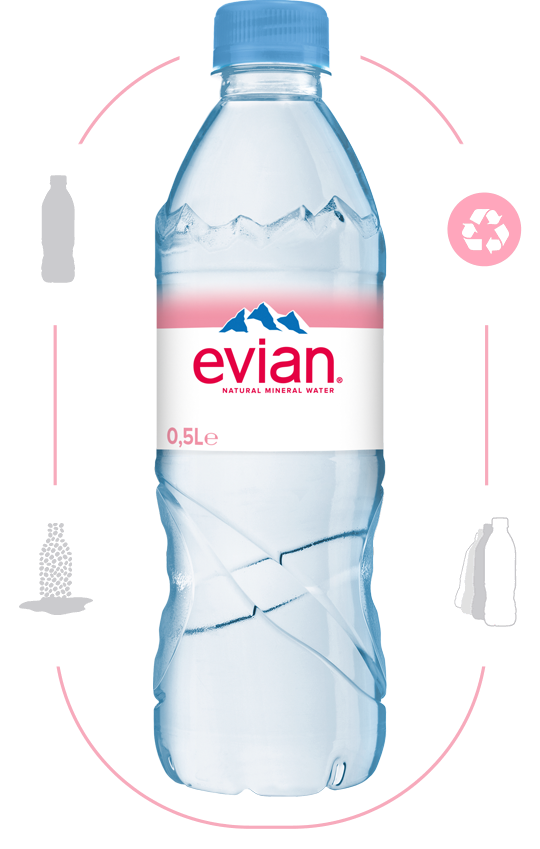
Next, the recycling bins are collected and the material in them is sorted according to color, size, and type; and excess residues are removed.
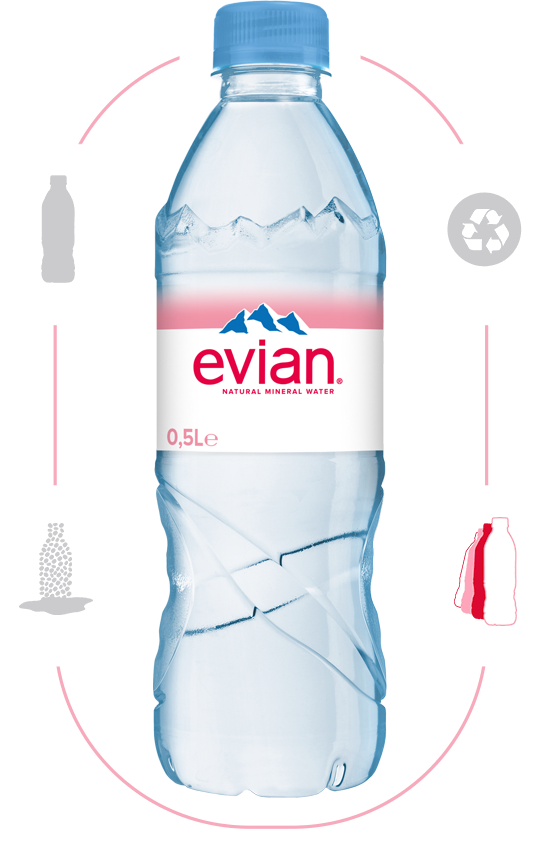
After that, they are thoroughly cleaned and processed into resin.
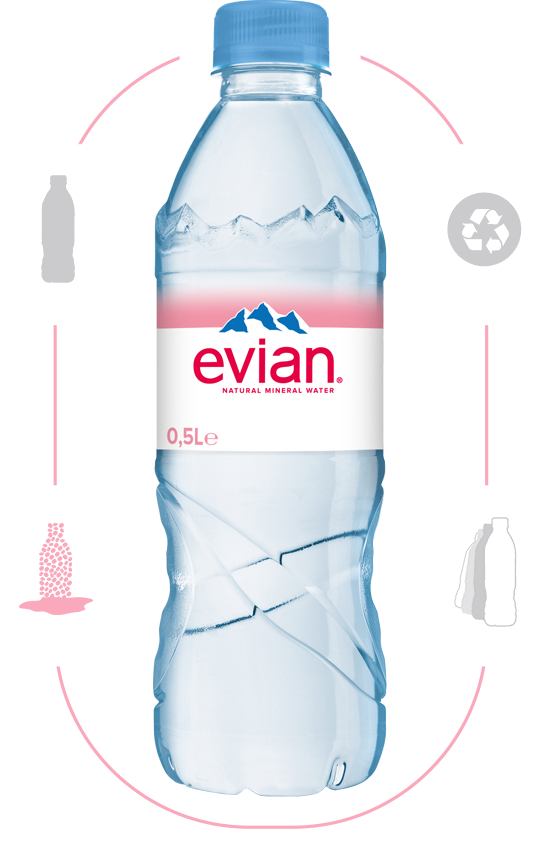
The resin is transformed and turned into bottles.
